In the food industry, packaging is more than just a formality—it’s a critical part of the food safety system. For producers and exporters of flour, sugar, coffee beans, cocoa, salt, or spices, using food-grade jumbo bags is a non-negotiable requirement.
Unfortunately, many industry players still assume that all Jumbo Bags are created equal. In reality, when it comes to food products, not every FIBC meets international cleanliness and safety standards.
So, what exactly should you look for?
What Is a Food-Grade Jumbo Bag?
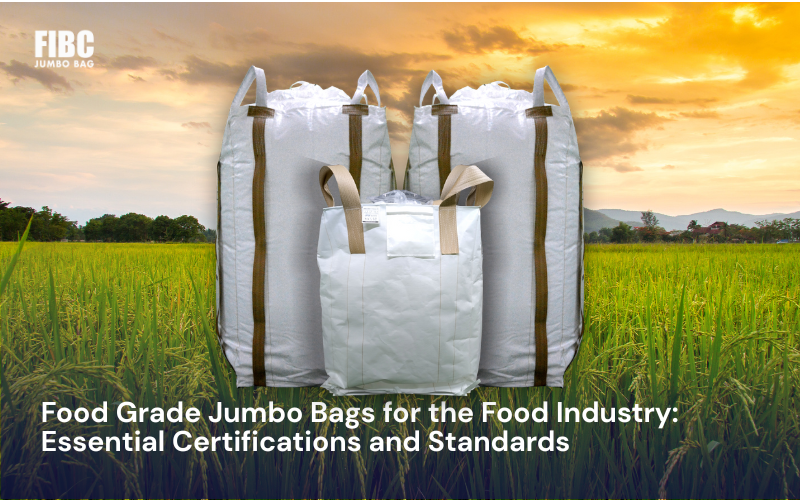
A food-grade jumbo bag is a type of FIBC (Flexible Intermediate Bulk Container) specifically designed to package food ingredients in large volumes while meeting strict hygiene and safety requirements. The raw materials, production process, and packaging environment are carefully controlled to prevent contamination and protect the quality of the contents.
Key Features of Food-Grade Jumbo Bags
- Made from virgin polypropylene resin (PP) with no recycled materials.
- Produced in cleanroom environments with stringent sanitation standards to prevent dust, insects, and foreign particles.
- Free from harmful chemicals, dyes, or additives that could leach into food.
- Equipped with inner liners (LDPE, aluminum foil, or multi-layer film) to preserve freshness and protect from humidity, odors, and moisture.
Common Applications of Food-Grade Jumbo Bags
- Flour & Starch Industry
Large-scale flour manufacturers rely on food-grade jumbo bags to transport products to food factories and industrial bakeries. Hygienic packaging ensures product safety during logistics. - Sugar and Salt Industry
These materials are highly sensitive to moisture. The inner liner in food-grade FIBCs helps maintain stable quality until they reach distributors or end users. - Coffee and Cocoa Exports
To preserve the aroma and quality of coffee and cocoa beans during long-distance ocean freight, exporters use jumbo bags that comply with FDA and European food packaging standards. - Spice and Herbal Products
High-value spices like nutmeg, cinnamon, pepper, and ginger require packaging that ensures authenticity and food safety. Certified jumbo bags add value to the export supply chain.
Why Jumbo Bag Certification Matters
To meet both domestic regulations and export requirements, it is crucial to use certified jumbo bags. Key certifications to look for include:
ISO 22000 / HACCP
This ensures the FIBC is manufactured under a certified food safety management system, with audit-backed controls on cleanliness, traceability, and raw material handling.
Halal MUI Certification
For the domestic market or countries with Muslim-majority populations, packaging must be free from haram contaminants and be Halal-certified.
Fact: Food products packaged without proper food-grade standards are likely to be rejected by international buyers or fail certification audits.
Risks of Ignoring Standards
- Kontaminasi bahan pangan akibat bag tidak steril
- Klaim kerusakan produk dari konsumen atau buyer
- Gagal lolos audit kualitas dari lembaga sertifikasi
- Penurunan reputasi merek akibat produk rusak atau tidak layak konsumsi
- Kerugian finansial karena produk harus ditarik dari pasar
FIBC Indonesia: Your Trusted Partner for Food-Grade Packaging
Not all FIBC manufacturers in Indonesia are equipped to meet international food safety standards. That’s where FIBC Indonesia comes in.
- We manufacture food-grade jumbo bags in facilities certified with ISO 22000 and Halal MUI.
- Our production takes place entirely in cleanroom environments, from stitching and liner installation to final packaging.
- We only use high-quality virgin materials—no recycled content.
- Our products are trusted by major food companies and national commodity exporters.
FIBC Indonesia serves bulk packaging needs across diverse industries throughout Indonesia. We offer a full range of certified jumbo bags from 500 kg to 2 tons, with customizable features to match your industry’s specific requirements.